
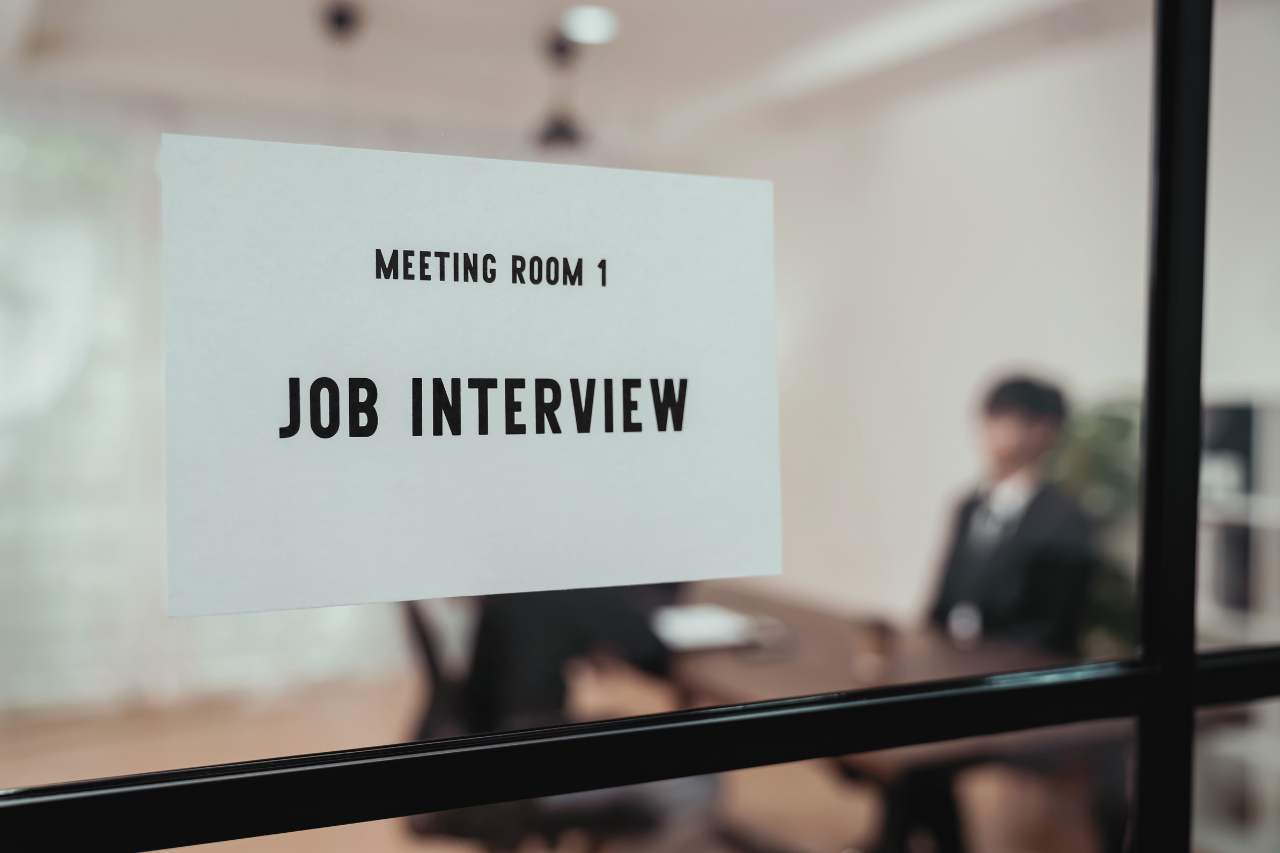
Job Interviews Aren’t Exams: 6 Mindsets to Help You Interview With Confidence

When preparing for a job interview, we usually start by thinking about what we need to prepare.
We research the company, learn about the position, organize our self-introduction, prepare for common interview questions, and sometimes even plan exactly how we will answer certain questions if they come up.
All of that preparation is important.
But when the actual interview begins, what makes us nervous is often not simply whether we are prepared. Once we are sitting in front of the interviewer, we may start worrying about things like:
“Will this answer cost me points?”
“Does the interviewer dislike my answer?”
“Did I just answer that question incorrectly?”
“If I don’t get the job, does that mean I’m not good enough?”
When all of our attention goes toward these questions, it is easy to forget one important thing:
A job interview is not an exam with one set of correct answers.
It is closer to a two-way conversation. The company wants to understand whether you are a good fit for the role, and you also have the opportunity to learn about the company, the team, and whether the job matches what you are looking for.
So instead of only preparing answers to interview questions, it can also help to think about how you want to approach the interview itself.
When you understand what you are actually trying to do during an interview, it becomes easier to stay grounded when you are asked something unexpected or when one of your answers does not go as planned.
The Purpose of an Interview Is to Find Out Whether You’re a Good Fit for Each Other
Many people naturally put themselves in the position of “waiting to be chosen” during an interview.
The interviewer asks questions, and you answer them. The interviewer makes a judgment, and you wait for the result.
But from another perspective, an interview is also an opportunity for you to get to know the company.
The company may want to understand:
- Whether you have the skills needed for the role
- What kind of experience you have and how much responsibility you actually took on
- How you think through and handle problems
- How you work with managers, colleagues, and other people you collaborate with
- Whether your working style matches what the team needs
At the same time, you can use the interview to learn:
- Whether the actual responsibilities match the job description
- How the team normally works together
- Whether the manager’s management style suits you
- What the company really expects from this position
- Whether the salary, working hours, and growth opportunities meet your needs
So an interview is not simply about “Does the company want me?”
It can also be seen as:
“Can I help them understand who I am, while also using this conversation to understand them?”
Once you start looking at interviews this way, your mindset can change.
Instead of constantly wondering, “What does the interviewer want to hear?” you can take a step back and ask:
“What part of me is this question trying to understand?”
And instead of focusing only on whether you get the offer, you can also pay attention to:
“Is this actually a job I want to do?”
Before Your Interview, Start With These 6 Mindsets
1. Take Every Interview Seriously, Without Treating Every One Like the Most Important Exam of Your Life
During a job search, you may interview with several companies at the same time.
Some may be companies you really want to join. Others may simply have an interesting position. And some may be opportunities you are exploring because you want to understand what is happening in the job market.
All of that is normal.
Still, once you have agreed to attend an interview, it is worth spending some time preparing for it.
You may think:
“I’m not really interested in this company. I’ll just use the interview as practice.”
There is nothing necessarily wrong with that mindset. But if it means you do not prepare at all, you may be missing an opportunity.
You never know where an interview might lead.
A position you were not particularly excited about might turn out to be more interesting once you learn about the actual work. You might also meet a manager, recruiter, or someone else in the industry who leads you to another opportunity later.
More directly, every interview can also teach you something about yourself.
For example:
- Which questions are easy for you to answer?
- Which experiences do you consistently struggle to explain?
- Which questions leave you unsure how to respond when the interviewer asks a follow-up?
- Which ways of describing your experience could easily be misunderstood?
- Which experiences are worth organizing or thinking through again?
If every interview helps you identify one thing you could improve, you will naturally become more familiar with the process over time.
So taking every interview seriously does not mean putting pressure on yourself to get every single job.
You can see each interview as an opportunity, as well as a chance to become more comfortable with interviewing.
2. Being Honest Doesn’t Mean Saying Whatever Comes to Mind: Be Yourself, but Learn How to Communicate in a Professional Setting
“Just be yourself in the interview” is advice we hear all the time.
But sometimes, we interpret it as:
“I should say exactly what I think. Otherwise, I’m not being authentic.”
The problem is that being genuine and speaking without any filter are two different things.
For example, imagine the interviewer asks:
“Why did you leave your previous job?”
You may genuinely feel:
“Because my previous manager was difficult to communicate with, and the company’s systems were a mess.”
That may be how you honestly felt.
But if you say it exactly that way, the interviewer may interpret your answer from a different perspective:
- How do you usually handle problems at work?
- Do you tend to blame other people when something goes wrong?
- If you become unhappy with the company’s processes in the future, how would you communicate that?
Learning to adjust how you express something in an interview does not mean pretending to be someone you are not.
When talking to a friend, you might say:
“My previous manager and I really didn’t get along.”
In an interview, you might instead say:
“My previous manager and I had different working styles. I work better when I have a certain level of autonomy, so I eventually started looking for a team with a management style that was a better fit for me.”
The core idea may not be that different. The difference is that you are also thinking about:
“How can I explain this so the other person can actually understand what I mean?”
That is also part of workplace communication.
We naturally adjust the way we communicate depending on the situation. We may speak differently with friends, colleagues, managers, or clients.
That does not necessarily make us fake.
Being able to understand different situations and communicate appropriately is also an important skill to develop as you enter the workplace.
So you can still “be yourself” without interpreting that advice as “say whatever comes to mind.”
You can be honest about how you think and feel while also learning how to express those thoughts in a way that works in a professional setting.
And being honest does not mean you do not need to prepare.
If an interviewer asks:
“Why are you interested in this position?”
and you answer:
“It just seems interesting.”
Then they ask:
“What do you know about our company?”
and you say:
“I looked at the website a little.”
Those answers may be completely honest. But the interviewer may also come away feeling that you did not prepare.
Preparing for an interview is not about turning yourself into someone else. In fact, preparing well can make it easier to clearly communicate who you already are.
3. You Don’t Have to Match 100% of the Job Description—Start by Understanding the Gap
When people see a job they are interested in, they often compare themselves with the job description line by line.
“Three years of experience? I only have two.”
“They want experience with this tool? I’ve never used it.”
“My industry experience is different, so I probably don’t qualify.”
Before really understanding the position, they have already rejected themselves on the company’s behalf.
But not every requirement in a job description is necessarily an absolute requirement.
For example, you may not have used the exact tool the company lists, but you may have experience with similar tools. You may not have worked in exactly the same industry, but you may have handled highly similar responsibilities. You may have slightly less experience than requested, but you may already have independently taken on work at the level the company needs.
These are things you can explain through your resume or during the interview.
Of course, not every requirement can be made up for simply by being enthusiastic.
Legal qualifications, required certifications, or certain core technical skills may genuinely be essential requirements.
So when you find a position you are interested in, try asking yourself:
“What is the gap between me and this position?”
Then take it one step further:
“Is this something I do not have yet but could compensate for through other experience, or is it genuinely a requirement that I cannot meet?”
If it is the former, it may be worth giving yourself a chance.
This kind of confidence does not mean applying for every job regardless of the requirements. It means not rejecting yourself too early simply because you do not match every line of the job description.
4. A Job Interview Isn’t an Exam: You Don’t Need a Perfect Answer to Every Question
One reason interviews make people nervous is that we easily start thinking of them as a test.
The interviewer asks:
“What was the biggest setback you experienced at work?”
And you may immediately think:
“What is the correct answer to this question?”
But many interview questions simply do not have one correct answer.
Different people have different experiences, and they may see the same situation from completely different perspectives. What interviewers are often trying to understand is not just the sentence you give as your final answer, but how you think, how you make decisions, and what you learned from your experience.
So instead of preparing a fixed answer for every possible question, it is more useful to start by organizing your own experiences.
For example:
- What important projects have you worked on?
- What problems have you solved?
- What results can you quantify?
- Which failure or setback has stayed with you?
- Have you ever disagreed with someone at work?
- How do you handle pressure?
- Which experiences demonstrate your abilities?
Once you have these experiences organized, you can practice combining them in different ways depending on the question.
This gives you much more flexibility than memorizing answers word for word.
Because in an actual interview, the interviewer may not ask the questions you prepared for.
They may also follow up on something you just said:
“Why did you decide to do it that way?”
“If you could do it again, what would you do differently?”
“Which parts of that project did you personally handle?”
At that point, what helps you is not whether you memorized the right sentence. It is whether you actually understand your own experience.
That is why interview preparation should focus on becoming more comfortable talking about your own experiences, rather than trying to memorize the perfect answer to every question.
5. Saying the Wrong Thing in an Interview Doesn’t Mean You’ve Failed—What Matters Is Whether You Can Get the Conversation Back on Track
Making mistakes during an interview is completely normal.
You might get a number wrong because you are nervous. You might give an answer that goes on too long and realize halfway through that you have drifted away from the question. Or the interviewer might suddenly ask something you have never prepared for.
If you start thinking:
“Oh no, did I just mess that up?”
you may end up letting that one mistake affect the rest of the interview.
But an interview does not end just because one answer did not go well.
If you realize that you did not actually answer the question, you can pause and say:
“I don't think I fully answered the question. Let me organize my thoughts and try again.”
If you suddenly think of a better example, you can add:
“The example I gave earlier may not have been the best one for this question. Let me give you another example.”
And if you genuinely do not know the answer, you can be honest about it:
“I haven't had direct experience with that yet, but if I encountered this situation, I would start by…”
The point is not to hide the mistake.
It is to show whether you can notice a problem, reorganize your thoughts, adjust your direction, and keep going.
That is something we encounter in the workplace all the time.
Things do not always go according to plan, and not every decision will be completely correct. Being able to notice a problem, make an adjustment, and move forward is part of being able to work effectively.
So if you make a small mistake during an interview, remind yourself:
“That question is already behind me. What I need to do now is answer the next one.”
You do not have to let one mistake affect the entire interview.
6. Don’t Treat an Interview Result as a Direct Judgment of Your Ability
If your job search goes on for a while, you may gradually start to feel worn down.
After the first rejection, you might think:
“This job probably wasn't the right fit anyway.”
After the third:
“Is there something wrong with my resume?”
And after many interviews without an offer, you may eventually start wondering:
“Maybe I’m just not good enough.”
It is easy to understand why people arrive at these thoughts.
But the outcome of an interview is never determined entirely by one person.
Your ability and interview performance matter, but so do the company’s hiring needs, team structure, salary budget, other candidates, and even the timing of the hiring process.
So it is fine to learn from a rejection, but you do not need to turn it into a judgment about your worth or ability.
Instead of repeatedly asking:
“Why didn't I get the offer again?”
you might ask:
“What did I learn from this interview?”
For example:
- Which questions did I answer well?
- Which answers were unclear?
- Which experiences do I need to organize better?
- Which questions had I not prepared for at all?
- What did the interviewer ask follow-up questions about?
- What did I learn about the company?
- If I get a similar question next time, how would I answer it?
Looking at interviews this way makes it easier to separate the result from the learning.
Not getting an offer does not necessarily mean the interview was a waste of time.
You may come away with a clearer idea of what kind of work suits you. You may realize that you do not like a certain management style. Or you may simply discover that there is one question you consistently struggle to answer.
All of that information can help you prepare for the next interview.
What You Really Need to Practice for an Interview
Researching the company, understanding the position, and organizing your experience are all important parts of interview preparation.
But if you think of preparation as “making sure I have an answer ready for every possible question,” you may still feel lost when someone asks something you did not expect.
What is worth practicing may be something more fundamental:
Knowing what you have done, understanding your strengths and limitations, and being able to clearly explain your experiences and ideas when faced with different questions.
At the same time, you do not have to ignore the situation just because you want to “be yourself.” And you do not need to turn yourself into someone completely different just to appear professional.
You can be honest and still have some boundaries.
You can be nervous and still keep answering.
You can make a mistake and still regroup.
More importantly, an interview is not only about the company evaluating you.
You are also using the conversation to figure out whether you actually like the job, whether you can see yourself working with the team, and whether this is a direction you want to pursue.
So if you start feeling nervous before your next interview, instead of reminding yourself:
“I have to perform really well.”
try thinking:
“My goal today is to help them understand me, and to understand the job as well.”
When an interview becomes more than a one-sided test where you simply wait for a result, it can become an opportunity to understand each other, practice communicating, and learn more about yourself.
And that can make it easier to find your own rhythm in the interview process.
If you are preparing for your next interview, start by organizing your own experiences instead of immediately trying to memorize model answers.
Think through the projects you have worked on, the problems you have faced, and both your successes and failures. Then practice explaining them clearly. In many cases, this will be more useful than preparing a long list of “perfect answers.”
——————
Have more career questions?
You can also talk with a HuntByte recruiter and sign up for HuntByte in three simple steps to find a career partner who can help you along the way.